PRIJAVA
Za učešće na ovom događaju potreban je besplatan IAAP nalog. Primljeni radovi i nagrade potom se skupljaju na profilu.
PRAVILA
ORGANIZATOR
7 COLOURS is international contest of art photography, organized by OZ MLBM from Mala Lehota, Slovakia.
SEKCIJE
The contest is divided into the following sections:
• COLOR OPEN
• LANDSCAPE
• PORTRAIT
• GEOMETRY
• TRAVEL PHOTOGRAPHY
• WOW – OPEN THEME ( Color, BW. )
• WOMEN - MEN - CHILDREN
• OPEN MONOCHROME
• BLUE – 450–495 NM ( VIOLET – 380–450 NM )
• GREEN – 495–570 NM
• YELLOW – 570–590 NM
• ORANGE – 590–620 NM
• RED – 620–700 NM
• BIRDS - ANIMALS
• WOMEN - MEN - CHILDREN
KALENDAR
Closing date: June 6, 2027
Judging date: June 20, 2027
Notification date: June 24, 2027
Delivery date: June 30, 2027
Gallery publish date: June 30, 2027
Judging date: June 20, 2027
Notification date: June 24, 2027
Delivery date: June 30, 2027
Gallery publish date: June 30, 2027
KOTIZACIJA
The entry fee depends on the number of sections the participant enters. The fees are as follows:
• 1-15 sections = 19 EUR
The entry fee can be paid in the following ways:
• through our website: https://theiaap.com/e/visiblespectrum
• PAYPAL ACCOUNT: [email protected]
• BANK PAYMENTS: SK3311000000002947138300
Images from participants who have not paid the entry fee will not be considered.
• 1-15 sections = 19 EUR
The entry fee can be paid in the following ways:
• through our website: https://theiaap.com/e/visiblespectrum
• PAYPAL ACCOUNT: [email protected]
• BANK PAYMENTS: SK3311000000002947138300
Images from participants who have not paid the entry fee will not be considered.
UČEŠĆE
The contest is open to anyone (amateur and professional photographers from all over the world); however, an entry may be rejected when the sponsoring organization or its agent, in its reasonable discretion, believes the entry does not conform to the contest rules and conditions.
Entries must originate as photographs (image-captures of objects via light sensitivity) made by the entrant on photographic emulsion or acquired digitally. By virtue of submitting an entry, the entrant certifies the image as his own (aliases are not permitted). The entrant permits the sponsors to reproduce all or part of the entered material free of charge for publication and/or display in media related to the exhibition. This may include low resolution posting on a website. Note: Entrants who indicate that their images may not be reproduced or used 'will not be eligible for awards' or inclusion in audio-visuals of the exhibition 'and could be subject to disqualification' by the exhibition sponsors.
By submitting an entry, the entrant certifies legal Age, and own all rights to these images, including copyright or parents or guardians gives permission on his/her behalf if he/she is not of Legal Age. The exhibition assumes no liability of any misuse of copyright. Images may be altered, either electronically or otherwise, by the maker. All final image must be on photographic film, or on electronic file, or on photographic or electronic print material, mounting excepted.
No title or identification of the maker shall be visible anywhere on the face of an image, print mat or mount.
## Competition Rules
### Colours of the Visible Spectrum
The colour sections are inspired by the rainbow. The competition features six colours: **red, orange, yellow, green, blue and violet**. In a rainbow, these colours blend gradually into one another.
The numbers in the section titles indicate the approximate wavelength ranges of light, measured in nanometres (nm). Red light has longer wavelengths and violet light has shorter wavelengths. The jury assesses each colour by how it appears in the finished photograph.
In each dedicated colour section, the specified colour must **dominate the image or stand out clearly in the main subject**. Different shades of the colour are welcome. Even a small area of colour can qualify if it plays a significant role in the composition.
### BLUE & VIOLET
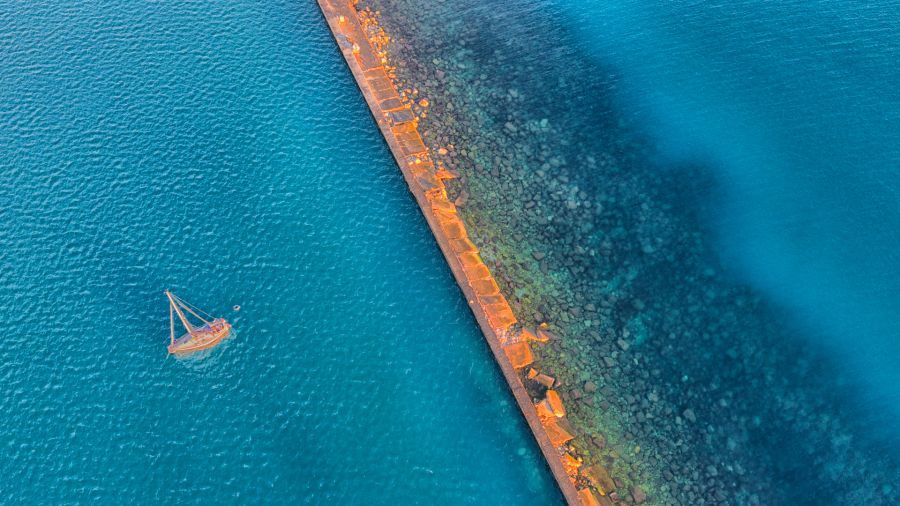
Blue (450–495 nm) and violet (380–450 nm) share one section. **Either blue or violet** must dominate the image or stand out clearly in the main subject. Examples include blue water or a close-up of a violet flower.
### GREEN (495–570 nm)
Green must dominate the image or stand out clearly in the main subject. Examples include a forest, a close-up of a green leaf or a striking green garment in a portrait.
### YELLOW (570–590 nm)
Yellow must dominate the image or stand out clearly in the main subject. Examples include a field of flowering rapeseed, a yellow umbrella or a yellow building façade.
### ORANGE (590–620 nm)
Orange must dominate the image or stand out clearly in the main subject. Examples include orange autumn leaves, the orange glow of a sunset or a striking orange object.
### RED (620–700 nm)
Red must dominate the image or stand out clearly in the main subject. Examples include a red poppy, a red dress or a striking red architectural feature.
### WOMEN – MEN – CHILDREN
The main subject must be **a person or a group of people**. Photographs may feature women, men or children, individually or in groups. They may show people at work, at play, in a family setting or in public spaces. Both candid and staged photographs are accepted.
### WOW – OPEN THEME (COLOUR & BLACK AND WHITE)
The theme is open. Colour and black-and-white photographs from all genres are accepted. The main criterion is the **“WOW effect”**. The photograph should catch the viewer’s eye immediately and leave a lasting impression.
An image may stand out through an extraordinary moment, a strong emotion, an unusual viewpoint, striking light or an original composition. The jury considers the image’s visual impact, its originality and how the photographer’s treatment of the subject contributes to that impact.
### MANY COLOURS IN ONE PHOTO – OPEN THEME
The theme is open. The aim is to capture **all six competition colours, or as many of them as possible, in a single photograph**. Red, orange, yellow, green, blue and violet should be clearly recognisable wherever they appear. Other colours and shades are welcome. The jury considers the variety of colours and how well they work together in the composition.
PRIJAVA
Photographs must be in JPEG format, with dimensions 1920x1080 pixels at 300, JPEG compression (if Photoshop used for export): 7-12, file size maximum 4 Mb. Each image must have a unique title. Titles must not include file extensions such as .jpg or .jpeg (or any other camera capture filenames). No title or identification of the maker shall be written anywhere on the face of an image.
The photographs of participants with the application are submitted in these ways:
- uploading thought our website: https://theiaap.com/e/visiblespectrum
- by e-mail: [email protected]
The photographs of participants with the application are submitted in these ways:
- uploading thought our website: https://theiaap.com/e/visiblespectrum
- by e-mail: [email protected]
IDENTIFIKACIJA
The judging will be done by remote online judging. All judges will be using equipment capable of displaying images at 100% of the image resolution. Judges will be using color calibrated equipment. Target Range will be max 30%.
ZAŠTITA PODATAKA
By entering this contest, the participant explicitly consents to the personal details supplied, including physical addresses and email addresses, being held, processed and used by the contest organizers for purposes associated with this contest. The participant also explicitly consents to such information being sent to organizations that have accorded official recognition, patronage or accreditation to this contest. The participant acknowledges, agrees and accepts that by entering this contest, their participation status, which includes first and last name, name of the country used during registration at the contest, number of sections entered and number of photos entered in those sections, will be made public in a published status list, and that the results of the entry shall be made public in the exhibition gallery and the exhibition catalog.
ŽIRI
• Vladimir Jovanovski; M NPUM; MPSA; RISF5; GPU CR3 Hermes (North Macedonia)
• Adela Rusu; EFIAP/d2, EPSA, MAAFR (Romania)
• Alexis Saveriades; EFIAP/d2, GPU CR-4, GPU-VIP-5, GPU-ZEUS (Cyprus)
• Anastasia Barmina; EFIAP (Russia)
• Mehmet ULUYURT; E IAAP / AFIAP / GPU CR1 / SSSY / SSSA / IIGS (Albania)
• Ahmed Mohamed Hassan; EFIAP/ p - APSA - PIPC Horus - MPSA - BPSA - GPU CR 2 - GPU Hermes - GPU VIP 3 - A.APS - AAPG - E.NPS - AICS - AAPAM - ASWAN - AUSPA - BEAPF - BEPSS - Hon.CPE - ES.CPE - E.CPE - EFIP Gold - EFMPA (Egypt)
• Monika Egerer; MPSA, BPSA, EFIAP/g, GPU VIP 4, c*mol, IIG s5+ p, E.NPS, A.drik (Germany)
• Gizela Halaszova; EFIAP, MFVSZ-OF (Slovakia)
NAGRADE
The judges of the event will present the following awards:
30 x IAAP Gold E-Certificate, 30 x IAAP Silver E-Certificate, 30 x IAAP Bronze E-Certificate, 105 x IAAP Honorable Mention E-Certificate
45 x NATIONAL Honorable Mention E-Certificate, 15 x NATIONAL Gold E-Certificate, 15 x NATIONAL Silver E-Certificate, 15 x NATIONAL Bronze E-Certificate
15 x CLUB Gold E-Certificate, 15 x CLUB Silver E-Certificate, 15 x CLUB Bronze E-Certificate
45 x SALON Honorable Mention E-Certificate
Total 375 awards. The organizer reserves the right to adjust the number of awards based on the total number of entrants.
DEFINICIJE
All entries shall conform to the stricter of these definitions for acceptances to be validated by all the international organizations granting recognition or patronage.
[General conditions]
● Every image is the work of the author, made from the author's own photographs.
● A section accepts both colour and monochrome work unless its name or the rules of the event say otherwise.
● Unless the definition restricts it, post-processing is free, but the subject must remain recognisable as the stated theme.
● Where a section is also entered as a FIAP or PSA division, the FIAP or PSA definition prevails over the text given here.
● Whether an image meets the theme is decided by the judges. An image outside the theme may be rejected before judging or left unscored, and the rules of the event say which of the two happens.
● An organizer may narrow a definition and must then publish the narrowing. An organizer may not widen one while keeping the standard section name.
● Images generated wholly or partly by generative artificial intelligence are not photographs and are not eligible in any section defined here.
[IAAP · Monochrome]
Black and white photography is an image that displays a range of shades from black to white, encompassing various tones of gray. Such an image focuses on the nuances of light, shadow, and contrast without incorporating any colors. If the entire image is toned in a single hue, it remains within the black and white category. However, if it is modified by partial toning or the addition of any color, it becomes a color work and no longer qualifies as a black and white photograph.
[IAAP · Travel]
A travel photograph captures the essence of a location, conveying the unique character and atmosphere of a place. It should reflect the natural beauty, cultural heritage, and distinctive features of the destination, providing viewers with a sense of the location identity and spirit. Travel photography encompasses a wide range of subjects, including landscapes, cityscapes, seascapes, architecture, people, and customs, all of which contribute to the overall experience of the destination. The primary goal is to transport viewers to the location through the image, allowing them to explore and appreciate the worlds diverse cultures and environments.
[Standard section definitions]
[Portrait]
Portrait photography focuses on a person or a small group, with particular attention to the face, gaze, expression or character. The people portrayed must be the main subject and shown as individuals, rather than simply as figures within a scene. Posed and candid portraits are equally welcome, including self-portraits and head-and-shoulders, three-quarter or full-length views. Environmental portraits are also accepted when the surroundings help convey the subject's character. Images in which people are incidental to a landscape, street scene or architectural study do not qualify. Neither do crowds without an identifiable subject or abstract studies that do not portray an individual.
[Landscape]
Landscape photography presents natural or cultivated land through its form, light or atmosphere. Mountains, plains, valleys, forests, deserts and agricultural land are all accepted subjects. The sky, weather and seasonal light may contribute to the scene. People and human-made features may appear, but the land must remain the main subject. Urban views belong in Cityscape, while images in which the sea or shore fills the frame belong in Seascape. Close studies of plants, rocks or the ground belong in Macro. These subjects fall outside the Landscape section.
[Animals]
The Animals section focuses on an animal as the main subject of the photograph. Unlike Nature, it does not exclude animals because they are domesticated or captive, or because people and human-made features are present. Pets, farm and working animals, and animals in zoos, sanctuaries and reserves are accepted. Wild animals may also be entered when the event does not offer a separate Nature or Wildlife section. This section provides a place for the domestic, farm and zoo subjects excluded from Nature sections. Taxidermy, models and toys do not qualify. Neither do images in which an animal is incidental to another subject.
[Geometry]
The Geometry section focuses on shapes, symmetry, repetition, patterns or the ordered arrangement of the frame. Both symmetry and deliberate asymmetry are accepted, along with repeated forms and visual rhythm. Circles, triangles, rectangles and curves may be subjects in their own right. Abstract geometric studies of buildings or natural forms are also welcome. The composition must deliberately emphasise the geometric relationships, rather than simply include them. Images without clear geometric organisation do not qualify.
[Woman, Man, Child]
Woman, Man, Child is a combined section for photographs in which a person or people are the main subject. It brings together subjects that an event might otherwise place in three separate sections. Single and group portraits of any age or gender are accepted, whether candid or directed. Figure studies are also welcome within the limits stated by the event. The title names alternatives: an image may show a woman, a man or a child, and does not need to include all three. Images without a person as their subject do not qualify.
OBAVJEŠTENJE I KATALOG
Notification cards will be sent by email.
KONTAKT
Jan Sranko, GM IAAP, EFIAP/s, MZSF, E PIPC, A CFFU,
Mala Lehota, Slovakia
email: [email protected]
website: https://theiaap.com/e/visiblespectrum
Mala Lehota, Slovakia
email: [email protected]
website: https://theiaap.com/e/visiblespectrum
KALENDAR
zatvaranje
žiriranje
obavještenje
isporuka
PREGLED
kotizacija
19 EUR
NAGRADE
nagrade
375
diplome
195
PATRONATNI BROJ
 IAAP
IAAP
SEKCIJE
Color Open
Open Monochrome
Blue – 450–495 Nm Violet – 380–450 Nm
Green – 495–570 Nm
Yellow – 570–590 Nm
Orange – 590–620 Nm
Red – 620–700 Nm
Birds Animals
Women Men Children
Landscape
Portrait
Geometry
Travel Photography
Wow – Open Color, Bw.
Women Men Children
ŽIRI
VJ
![]()
Vladimir Jovanovski
EJ IAAP
North Macedonia
AR
![]()
Adela Rusu
CJ IAAP
Romania
AS
![]()
Alexis Saveriades
CJ IAAP
Cyprus
AB
![]()
Anastasia Barmina
CJ IAAP
Russia
MU
![]()
Mehmet ULUYURT
CJ IAAP
Albania
AH
![]()
Ahmed Mohamed Hassan
CJ IAAP
Egypt
ME
![]()
Monika Egerer
CJ IAAP
Germany
GH
![]()
Gizela Halaszova
CJ IAAP
Slovakia