ارسال
شرکت در این رویداد به یک حساب رایگان IAAP نیاز دارد. سپس پذیرش ها و جوایز در نمایه گردآوری می شوند.
قوانین
سازماندهنده
LUMINOUS LENS is international contest of art photography, organized by Global Art from Kragujevac, Serbia.
بخشها
The contest is divided into the following sections:
• Open Color
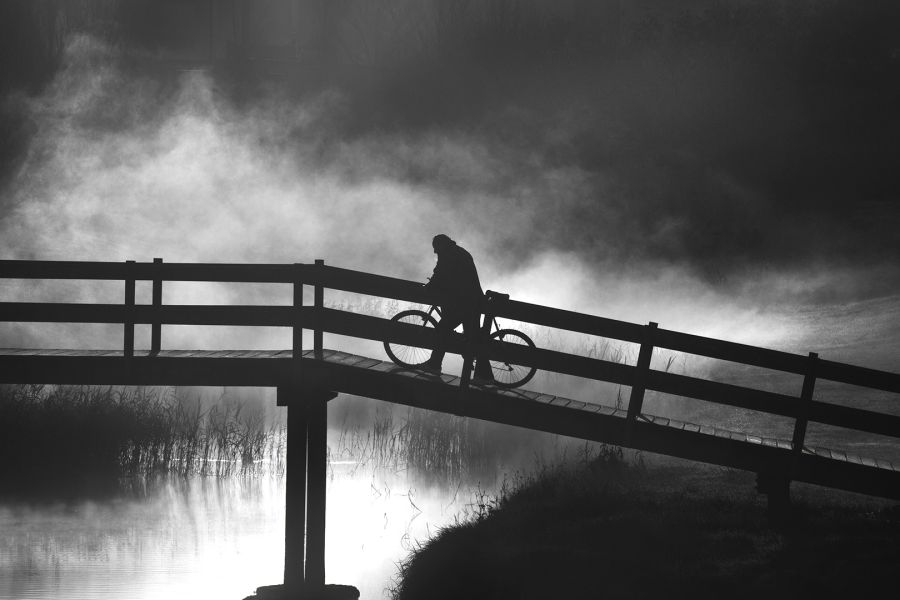
• Contre-jour
• Shadow Play
• Negative Space
• Open Mono
• Portrait
• People
• Nature
• Travel
• Photojournalism
• Light as Subject
• I One Light Source
• Open Color
• Contre-jour
• Shadow Play
• Negative Space
• Open Mono
• Portrait
• People
• Nature
• Travel
• Photojournalism
• Light as Subject
• I One Light Source
تقویم
Closing date: December 5, 2026
Judging date: December 20, 2026
Notification date: December 30, 2026
Delivery date: December 30, 2026
Gallery publish date: December 30, 2026
Judging date: December 20, 2026
Notification date: December 30, 2026
Delivery date: December 30, 2026
Gallery publish date: December 30, 2026
پرداخت
The entry fee depends on the number of sections the participant enters. The fees are as follows:
• 1-3 sections = 6 EUR
• 4-6 sections = 10 EUR
• 7-9 sections = 15 EUR
• 10-12 sections = 20 EUR
The entry fee can be paid in the following ways:
• through our website: https://contest.globalart.in.rs/luminous
Images from participants who have not paid the entry fee will not be considered.
• 1-3 sections = 6 EUR
• 4-6 sections = 10 EUR
• 7-9 sections = 15 EUR
• 10-12 sections = 20 EUR
The entry fee can be paid in the following ways:
• through our website: https://contest.globalart.in.rs/luminous
Images from participants who have not paid the entry fee will not be considered.
مشارکت
The contest is open to anyone (amateur and professional photographers from all over the world); however, an entry may be rejected when the sponsoring organization or its agent, in its reasonable discretion, believes the entry does not conform to the contest rules and conditions.
Entries must originate as photographs (image-captures of objects via light sensitivity) made by the entrant on photographic emulsion or acquired digitally. By virtue of submitting an entry, the entrant certifies the image as his own (aliases are not permitted). The entrant permits the sponsors to reproduce all or part of the entered material free of charge for publication and/or display in media related to the exhibition. This may include low resolution posting on a website. Note: Entrants who indicate that their images may not be reproduced or used 'will not be eligible for awards' or inclusion in audio-visuals of the exhibition 'and could be subject to disqualification' by the exhibition sponsors.
By submitting an entry, the entrant certifies legal Age, and own all rights to these images, including copyright or parents or guardians gives permission on his/her behalf if he/she is not of Legal Age. The exhibition assumes no liability of any misuse of copyright. Images may be altered, either electronically or otherwise, by the maker. All final image must be on photographic film, or on electronic file, or on photographic or electronic print material, mounting excepted.
No title or identification of the maker shall be visible anywhere on the face of an image, print mat or mount.
ارسال
Photographs must be in JPEG format, with dimensions 1920x1080 pixels at 300, JPEG compression (if Photoshop used for export): 7-12, file size maximum 4 Mb. Each image must have a unique title. Titles must not include file extensions such as .jpg or .jpeg (or any other camera capture filenames). No title or identification of the maker shall be written anywhere on the face of an image.
The photographs of participants with the application are submitted in these ways:
- uploading thought our website: https://contest.globalart.in.rs/luminous
- by e-mail: [email protected]
The photographs of participants with the application are submitted in these ways:
- uploading thought our website: https://contest.globalart.in.rs/luminous
- by e-mail: [email protected]
شناسایی
The judging will be done by remote online judging. All judges will be using equipment capable of displaying images at 100% of the image resolution. Judges will be using color calibrated equipment. Target Range will be max 30%.
حفاظت از دادهها
By entering this contest, the participant explicitly consents to the personal details supplied, including physical addresses and email addresses, being held, processed and used by the contest organizers for purposes associated with this contest. The participant also explicitly consents to such information being sent to organizations that have accorded official recognition, patronage or accreditation to this contest. The participant acknowledges, agrees and accepts that by entering this contest, their participation status, which includes first and last name, name of the country used during registration at the contest, number of sections entered and number of photos entered in those sections, will be made public in a published status list, and that the results of the entry shall be made public in the exhibition gallery and the exhibition catalog.
هیئت داوران
• Vanja Djordjevic Krvavac;
• Zoran Zdravev;
• Aleksandar Tomulic;
• Zoran Zdravev;
• Aleksandar Tomulic;
جوایز
The judges of the event will present the following awards:
12 x IAAP Gold E-Certificate, 12 x IAAP Silver E-Certificate, 12 x IAAP Bronze E-Certificate, 36 x IAAP Honorable Mention E-Certificate
36 x SALON Honorable Mention E-Certificate, 12 x SALON Gold E-Certificate, 12 x SALON Silver E-Certificate, 12 x SALON Bronze E-Certificate
36 x ZOPA Honorable Mention E-Certificate, 12 x ZOPA Gold E-Certificate
Total 192 awards. The organizer reserves the right to adjust the number of awards based on the total number of entrants.
تعاریف
All entries shall conform to the stricter of these definitions for acceptances to be validated by all the international organizations granting recognition or patronage.
[General conditions]
● Every image is the work of the author, made from the author's own photographs.
● A section accepts both colour and monochrome work unless its name or the rules of the event say otherwise.
● Unless the definition restricts it, post-processing is free, but the subject must remain recognisable as the stated theme.
● Where a section is also entered as a FIAP or PSA division, the FIAP or PSA definition prevails over the text given here.
● Whether an image meets the theme is decided by the judges. An image outside the theme may be rejected before judging or left unscored, and the rules of the event say which of the two happens.
● An organizer may narrow a definition and must then publish the narrowing. An organizer may not widen one while keeping the standard section name.
● Images generated wholly or partly by generative artificial intelligence are not photographs and are not eligible in any section defined here.
[IAAP · Monochrome]
Black and white photography is an image that displays a range of shades from black to white, encompassing various tones of gray. Such an image focuses on the nuances of light, shadow, and contrast without incorporating any colors. If the entire image is toned in a single hue, it remains within the black and white category. However, if it is modified by partial toning or the addition of any color, it becomes a color work and no longer qualifies as a black and white photograph.
[IAAP · Nature]
A nature photograph records all aspects of the natural world, both animate and inanimate. The primary subject of a nature photograph should be animals and elements of nature, though human and human-made elements are allowed as long as they do not dominate the scene. The image must convey the truth of the scene and be presented honestly, without unethical practices to manipulate the subject or setting. High technical standards are expected, and the photograph should look natural. Human activity or objects are permissible only if they are a necessary part of the nature story being told.
[IAAP · Photojournalism]
A photojournalism photograph is an image that captures a moment or event in a way that tells a factual story, intended to inform and convey truth to the public. It should document real events, people, and places without staging or manipulation, ensuring the authenticity of the scene. The primary aim is to provide an accurate and unbiased representation of the subject matter, often related to news, social issues, cultural events, or significant moments in history. Ethical standards are crucial in photojournalism, prohibiting any alterations that could mislead the viewer or distort the reality of the captured moment.
[IAAP · Travel]
A travel photograph captures the essence of a location, conveying the unique character and atmosphere of a place. It should reflect the natural beauty, cultural heritage, and distinctive features of the destination, providing viewers with a sense of the location identity and spirit. Travel photography encompasses a wide range of subjects, including landscapes, cityscapes, seascapes, architecture, people, and customs, all of which contribute to the overall experience of the destination. The primary goal is to transport viewers to the location through the image, allowing them to explore and appreciate the worlds diverse cultures and environments.
[Standard section definitions]
[Portrait]
Portrait photography focuses on a person or a small group, with particular attention to the face, gaze, expression or character. The people portrayed must be the main subject and shown as individuals, rather than simply as figures within a scene. Posed and candid portraits are equally welcome, including self-portraits and head-and-shoulders, three-quarter or full-length views. Environmental portraits are also accepted when the surroundings help convey the subject's character. Images in which people are incidental to a landscape, street scene or architectural study do not qualify. Neither do crowds without an identifiable subject or abstract studies that do not portray an individual.
[People]
The People section explores people and the situations, activities and surroundings that shape their lives. One or more people must be the subject of the photograph. Individuals, groups and crowds are accepted, whether shown at work, at rest, travelling or in their everyday surroundings. Both candid and directed photographs are welcome. The section is broader than Portrait because it considers people within a situation, rather than only as portrait subjects. Portraits are accepted when the event does not offer a separate Portrait section. Images without a visible person, or in which a person serves only to show the scale of a landscape or building, do not qualify.
[Shadows]
In this section, shadows must be a central subject of the photograph, not simply a result of the lighting. They may create a graphic pattern, contribute to a story, describe a shaded form or suggest a subject that is outside the frame. Silhouettes and strong contrasts between light and shade are also accepted. The definition includes sections named Light and Shadow, where both are explored together. Simply including shadows in an otherwise unrelated image is not enough. When the event offers a separate Silhouettes section, silhouette images belong there instead.
[Light]
The Light section explores light itself: its direction, quality, colour or behaviour. Accepted approaches include backlighting, rim lighting, photographing towards the light (contre-jour), window light and other directional lighting. Visible beams, flare, refraction, diffraction and light painting are also welcome, as are night scenes and artificial lighting when the light is the subject. The image must depend on the particular character or effect of the light. A photograph that is simply well lit, without making light central to its meaning or composition, does not qualify.
Light as Subject · A beam, glow, ray or trail of light is the subject itself, not just the illumination.
One Light Source · A scene lit by a single source only: a window, lamp, candle, phone screen or street light.
Shadow Play · Shadow as the main carrier of form or story.
Negative Space · Minimalist compositions where empty space carries the image.
اطلاعیه و کاتالوگ
Notification cards will be sent by email.
تماس
Marija Stojanovic
Kragujevac, Serbia
email: [email protected]
website: https://contest.globalart.in.rs/luminous
Kragujevac, Serbia
email: [email protected]
website: https://contest.globalart.in.rs/luminous
تقویم
آخرین روز
روز داوری
روز اطلاع رسانی
تحویل کاتالوگ
نمای کلی
شرکتکنندگان
2
عکس
20
کشورها
2
پرداخت
6 EUR
جوایز
جوایز
192
دیپلمها
108
تعداد حامیان
 IAAP
 ZOPA
IAAP
ZOPA
بخشها
Open Color
Open Monochrome
Portrait
People
Nature
Travel
Photojournalism
Light As Subject
One Light Source
Contrejour
Shadow Play
Negative Space
هیئت داوران